How to Fix a Leaking Tap — and When to Call a Plumber
A leaking tap is the most common plumbing call-out we attend in Nairobi, and the most commonly misdiagnosed. The drip itself is rarely the problem — it is a worn washer, a failed cartridge or a corroded seat that the drip is only announcing. This guide walks you through diagnosing the leak, the parts most likely to blame, and the point at which it stops being a DIY job and becomes one for a plumber.
Start here: isolate the water
Before touching a single fitting, find the isolation valve for the tap you are working on — under the sink, behind the cistern or on the supply line — and close it. If there is no isolation valve, close the main stopcock for the building and open the lowest tap in the house to drain the remaining water from the pipes. Working on a pressurised line turns a five-minute repair into a flooded kitchen.
Identify which kind of tap you have
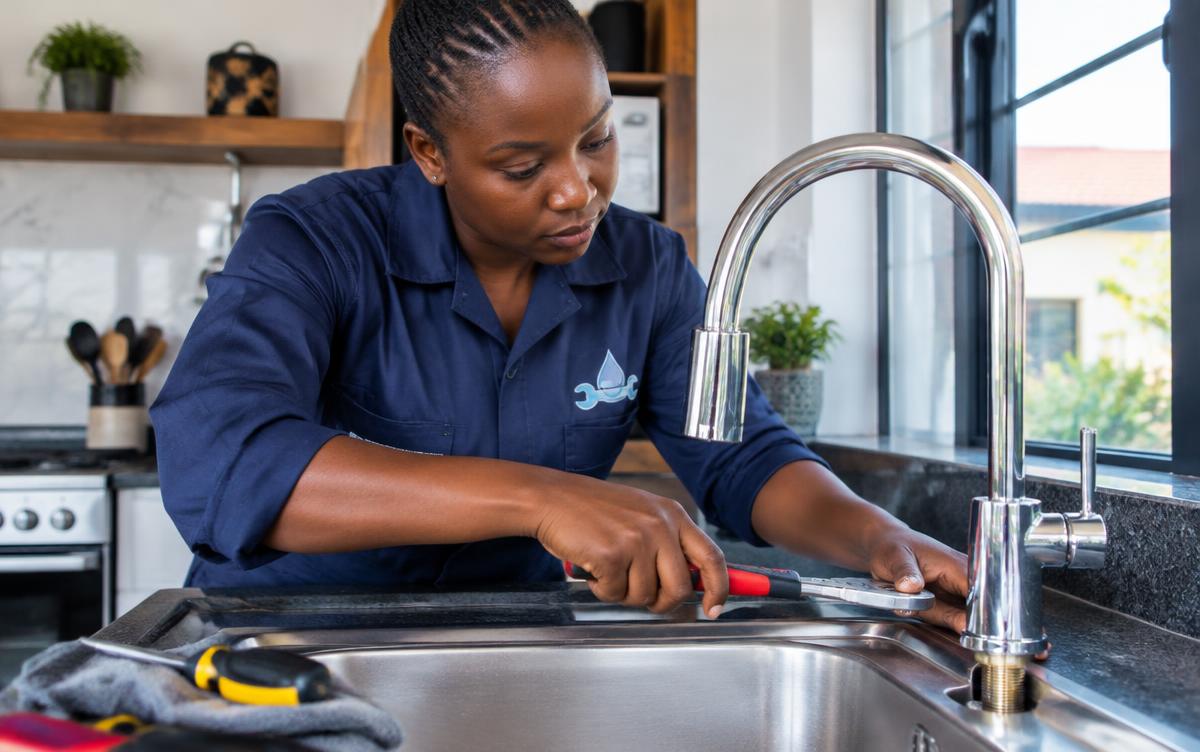
Traditional pillar taps and most older mixers seal with a rubber washer pressed against a brass seat — turn the tap off and the washer stops the flow. Modern mixers and monobloc taps usually use a ceramic disc cartridge, turned by the lever, which needs no force to shut off. Compression taps drip when the washer or the seat wears; cartridge taps drip when the ceramic discs or their seals wear out or when grit gets between them.
The usual culprits, in order of likelihood
For a compression tap: the washer is worn (replace it, and check the brass seat underneath — if it is scored, it needs re-grinding or replacing), or the O-ring on the spindle has perished, which shows up as water leaking around the stem rather than from the spout. For a mixer or monobloc: the cartridge is worn, or the flexible connectors and swivel seals under the spout have failed. A tap that drips only when another outlet is running points to a different fault entirely — often water hammer or a loose pipe — and is worth professional diagnosis.
Fix it or replace it?
If the body of the tap is sound and standard spares exist, repair it: a washer or cartridge costs a fraction of a new fitting. Replace the tap when the body is corroded or pitted, when it is a cheap fitting whose spares cost more than the whole unit, or when you are upgrading sanitary fittings anyway — labour is the expensive part, and fitting a quality tap while a plumber is on site is the economical moment to do it.
When to call a plumber instead
Call a professional if the leak is inside a wall, ceiling or floor; if there is no working isolation valve; if the same tap starts dripping again within weeks of a repair (the underlying cause has not been found); or if the leak comes with a drop in water pressure, which can indicate a supply-line problem. Persistent multi-tap dripping across a whole building is a maintenance issue, not a tap issue.
Our crews carry washers, cartridges, cistern fittings and common spares on the van, so most tap repairs are finished on the first visit. If you would rather not open a fitting yourself, request a quote and we will diagnose first, then fix.
How we can help
- Learn about our plumbing repairs services
- Learn about our sanitary fittings services
- Learn about our maintenance & repairs services
Or call us directly on 0742 300 555 — we are happy to talk it through first.